Write and send New
Ghostwriter
Give it a topic and your take. A first draft lands in your editor, in your voice, already checked for slop.
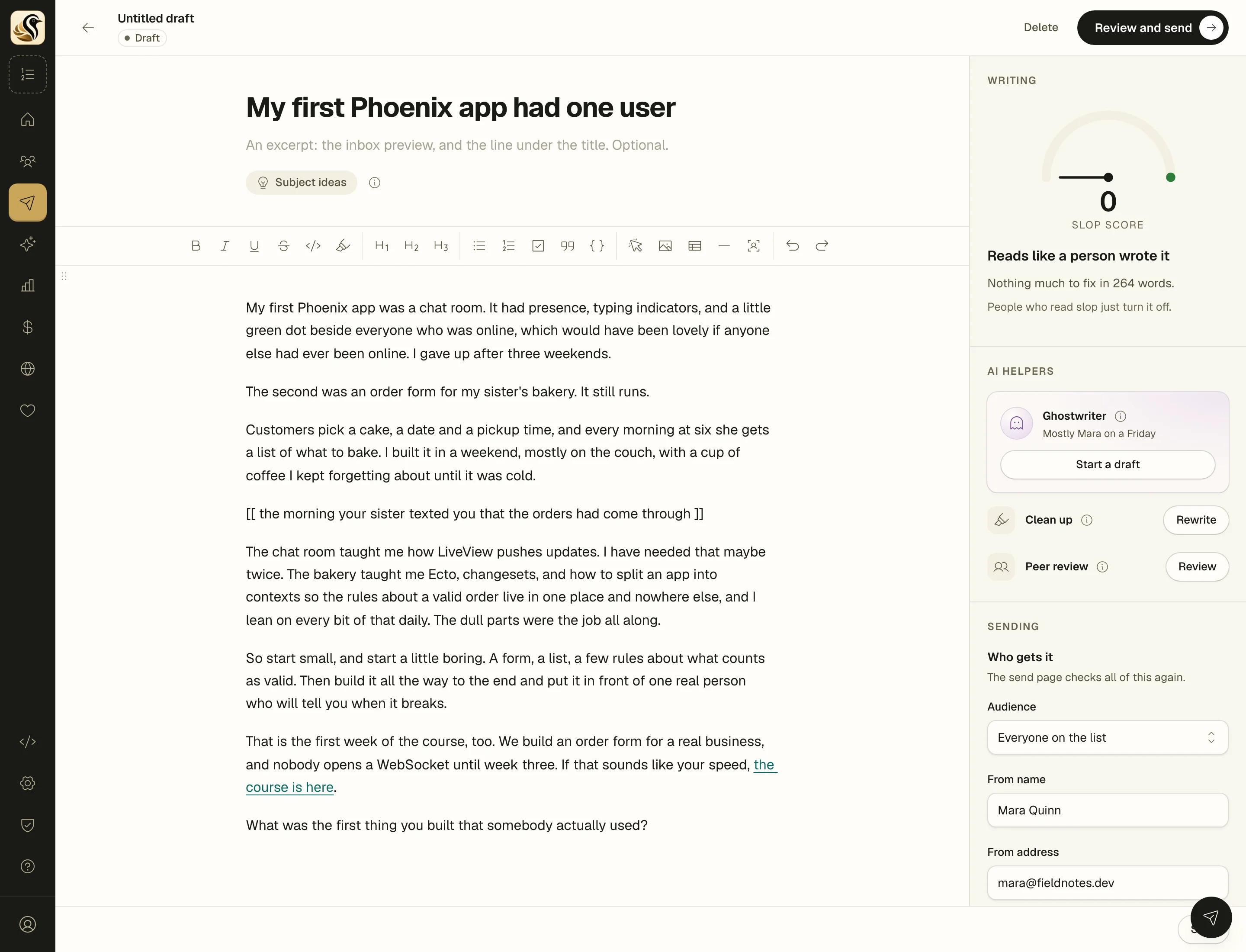
What it is
Most weeks the hard part isn't the writing. It's the blank page on a Tuesday night, knowing the newsletter is due and having one half-formed idea. I've put off more emails at that moment than I'd like to admit.
The Ghostwriter is for that moment. Give it a topic and what you think about it, and about a minute later a first draft is in your editor, in a voice you tuned, already checked for slop. It never makes up a fact about you, it leaves your own stories for you to tell, and it never sends anything. You still write the email. You just don't start from nothing.
01 Ghostwriter
A topic and your take
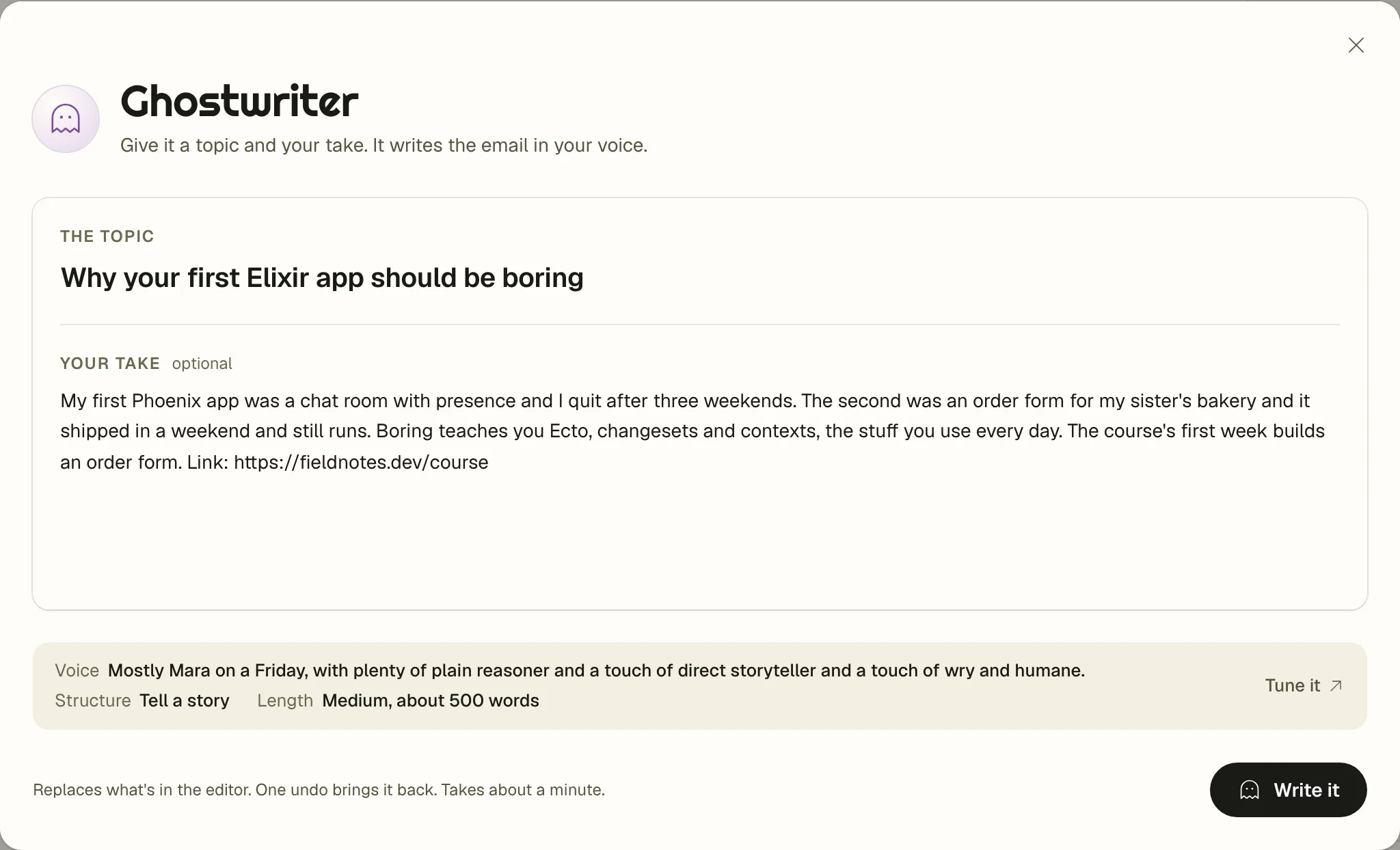
Open it from any broadcast or sequence mail. Type the topic in a line, then as much of your take as you like: what you think, a story you want in it, a link, what the reader should walk away with. The more of you that goes in, the less it sounds like anyone else.
-
Your notes are the only source of facts, every number, name, quote and result in the draft has to come from what you typed, so nothing goes out under your name that you didn't know.
-
Links only from your notes, any link it didn't get from you becomes a [[ link ]] note instead of a guess.
-
The voice, structure and length are right there, with a link to tune them, so you know what you're going to get before you click.
02 Ghostwriter
It sounds like you
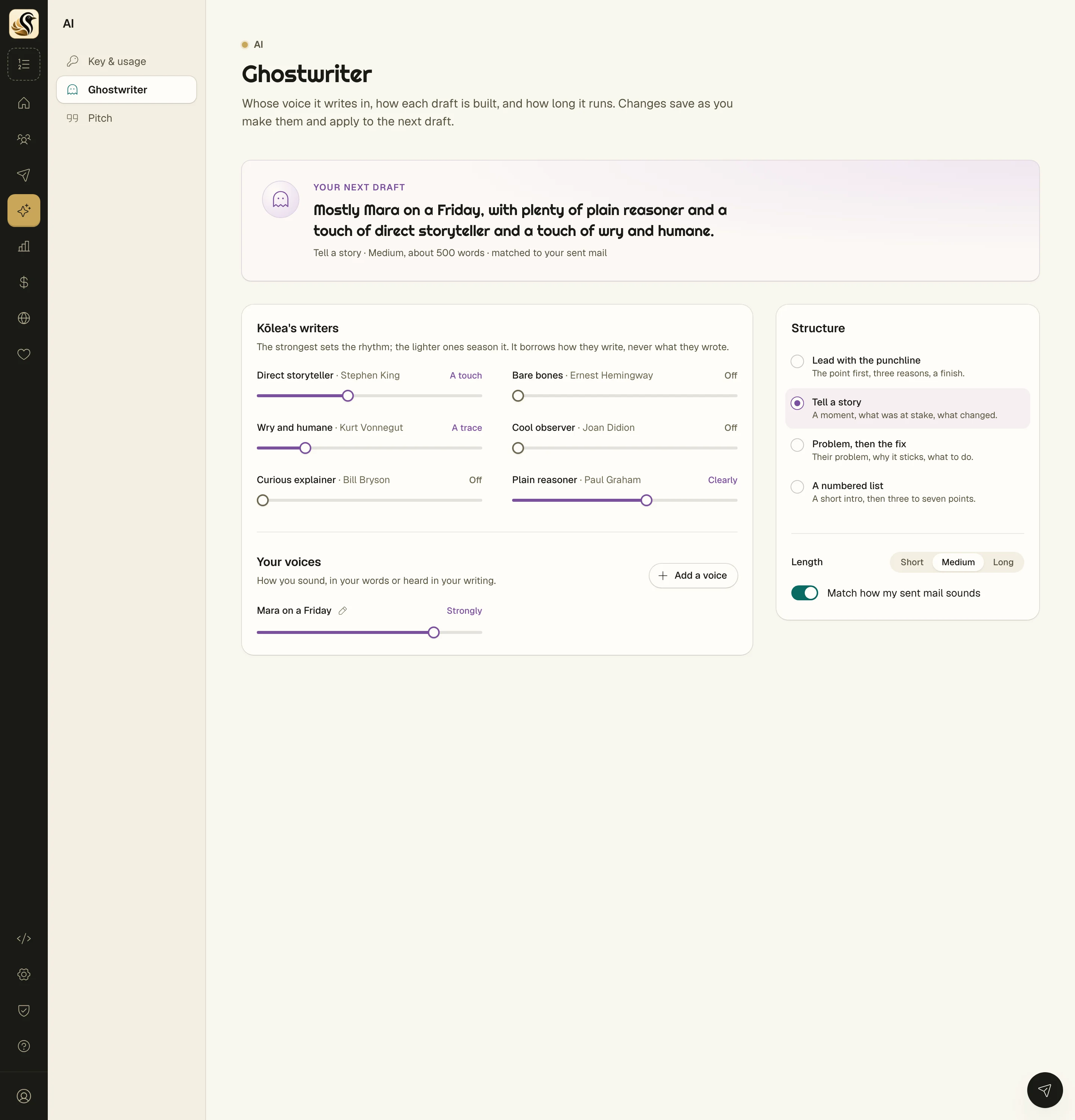
Six writers' styles sit on sliders: a direct storyteller, bare bones, wry and humane, a cool observer, a curious explainer, and a plain reasoner. Turn one up and it sets the rhythm; turn others down to a touch and they season it.
The model borrows how they write, never what they wrote. It doesn't quote them, name them, or parody them. Next to them sit up to six voices of your own, each on its own slider, and a switch to match how your sent mail already sounds.
-
Four ways to build an email, the punchline first, a story, a problem and its fix, or a numbered list. The story shape leaves the scene itself for you if your notes don't have one.
-
Short, medium or long, about 250, 500 or 900 words, and it lands within about fifteen percent.
-
A sentence that says what you'll get, "Mostly Mara on a Friday, with plenty of plain reasoner", so you don't have to remember what the sliders mean.
03 Ghostwriter
Hear your own voice
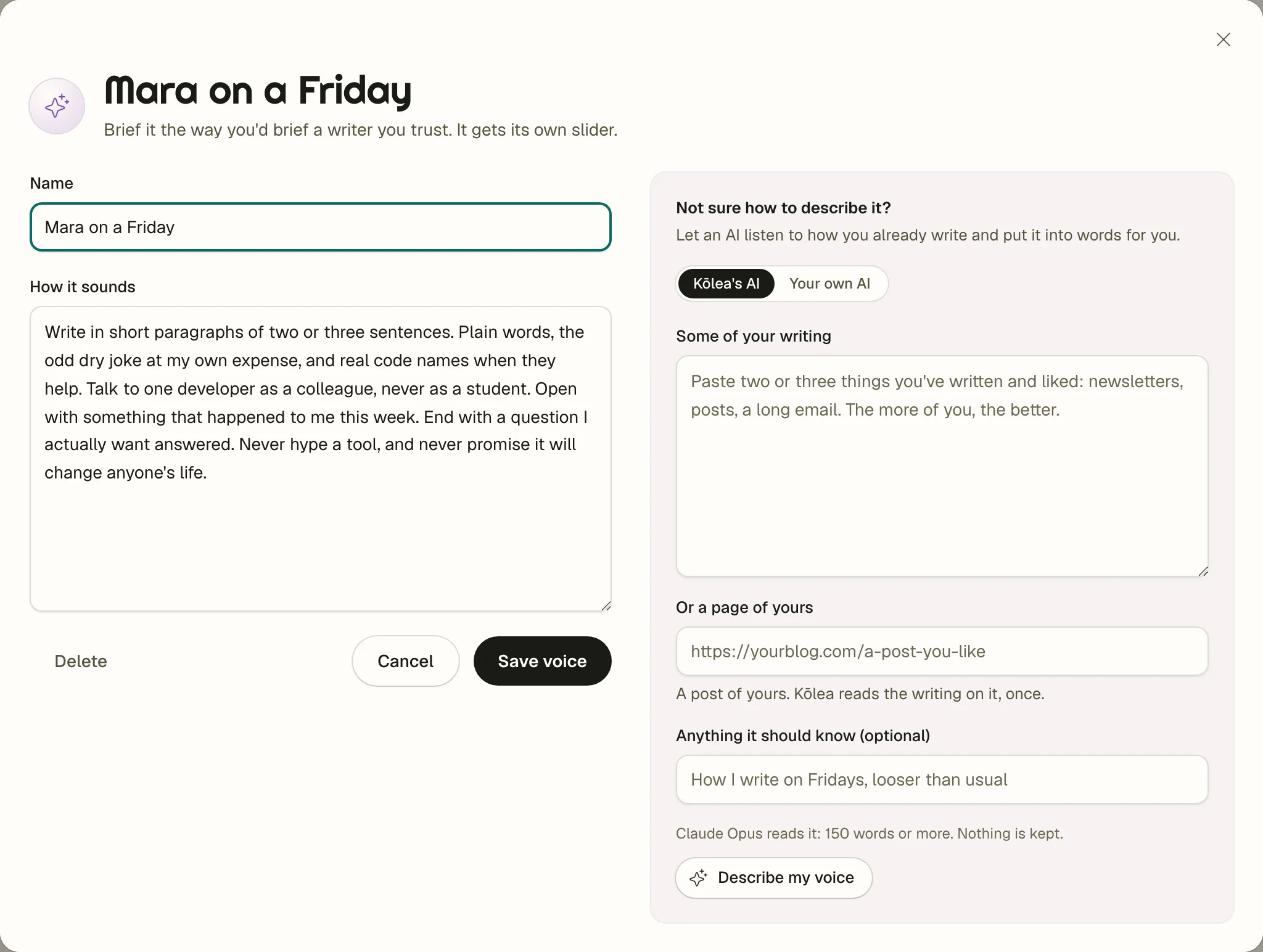
Not sure how to describe the way you write? Paste two or three things you've written and liked, or name a page of yours, and Kōlea describes your voice as a brief another writer could follow: rhythm, word choice, how you open and close, your humour, and what you never do.
-
It describes the voice, never the content, no quotes from your writing and no famous names, so the Ghostwriter borrows your manner and not your old topics.
-
Edit what it hears, the description is plain sentences you can change, and the voice gets its own slider.
-
Or use your own AI, copy the same brief into any chat tool you like and paste back what it says, at no cost to you.
04 Ghostwriter
Checked before you see it
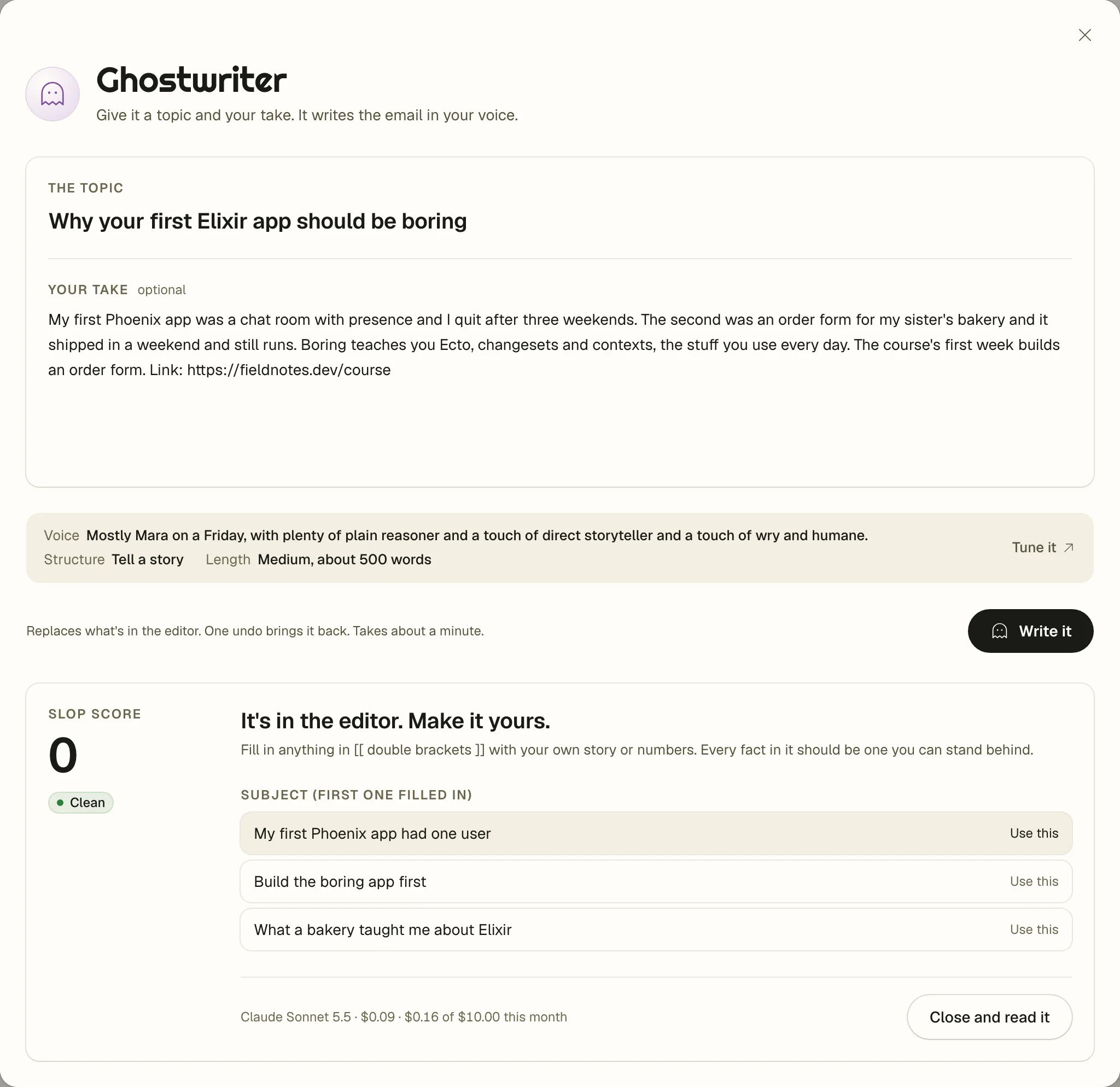
Every draft goes through the slop meter on its way back. If it isn't clean, the Ghostwriter gets the meter's findings and revises once, and you get the better of the two. You see the score, three subject lines, and what the call cost.
-
[[ Notes ]] where your story goes, up to four, saying what belongs there, like the morning your first order came through. It won't invent a moment from your life.
-
No em dashes, no "here's the thing", the house style the slop meter enforces is the same one the Ghostwriter is held to.
-
Three subjects, the first one filled in, and a click swaps in either of the others.
05 Ghostwriter
Then it's yours
The draft replaces what's in the editor as one change, so a single undo brings back what you had. It isn't saved until you save it, and nothing is sent until you send it. Fill in the notes, cut what isn't you, and the slop meter keeps watching while you do.
-
In broadcasts and sequence mails, the same Ghostwriter card sits in the editor's side column for both.
-
On your plan's AI or your own key, the calls come out of the monthly allowance you can see, or go through your own OpenRouter key with no limit from us.
-
Your prompts and its answers aren't kept, only what each call cost.
The short version
- Type a topic and what you think about it. About a minute later the draft is in your editor with three subject lines beside it.
- Tune the voice with six writers' sliders (a direct storyteller, a plain reasoner, a wry humanist and more) and up to six voices of your own.
- Paste some of your writing, or name a page of yours, and Kōlea describes how you sound so the Ghostwriter can match it.
- Pick how it's built: the punchline first, a story, a problem and its fix, or a numbered list. Short, medium, or long.
- It never invents a number, a quote, or a story about you. Where your own moment belongs, it leaves [[ a note ]] for you to fill in.
- Every draft is scored by the slop meter and revised once if it isn't clean. Nothing is saved or sent until you do it.
Try it on your own list
Free for your first 500 subscribers, no credit card needed. We'll help you move your list over.